
John Cleveland is a public affairs professional and senior fellow at Wilberforce Institute . He previously worked for the Humane Society of the United States.
Pop quiz. Upon signing one of the most important federal animal welfare laws in U.S. history, a former president said:
“We have a responsibility to honor the dignity of God’s creation. With today’s act, we take the critical step toward being more responsible and humane stewards of our planet and all who we want to cherish and take care of, and all of those who live on it.”
Any guesses? Donald Trump.
He made this statement in 2019 upon signing into law H.R. 724, the Preventing Animal Cruelty and Torture Act. For years, the act had been a pipe dream among animal advocates — a federal statute aimed at criminalizing the torture and killing of “living non-human mammals, birds, reptiles, or amphibians.” For five years now, it’s been the law of the land.
Granted, Trump’s animal-welfare record during his first term was far from flawless. His Fish and Wildlife Service rolled back Obama-era bans on the import of elephant and lion trophies. It also nixed Endangered Species Act protections for grizzly bears in Yellowstone and gray wolves in the continental United States. (Courts later overturned these actions.) His Agriculture Department repealed a rule setting basic standards for organic farming.
However, his administration absolutely helped notch some critical victories for the broader animal welfare movement. Now, as the once-and-future president begins shaping his next administration, take notice of some of the people he has selected for Cabinet positions relevant to this issue. The list is surprisingly pro-animal.
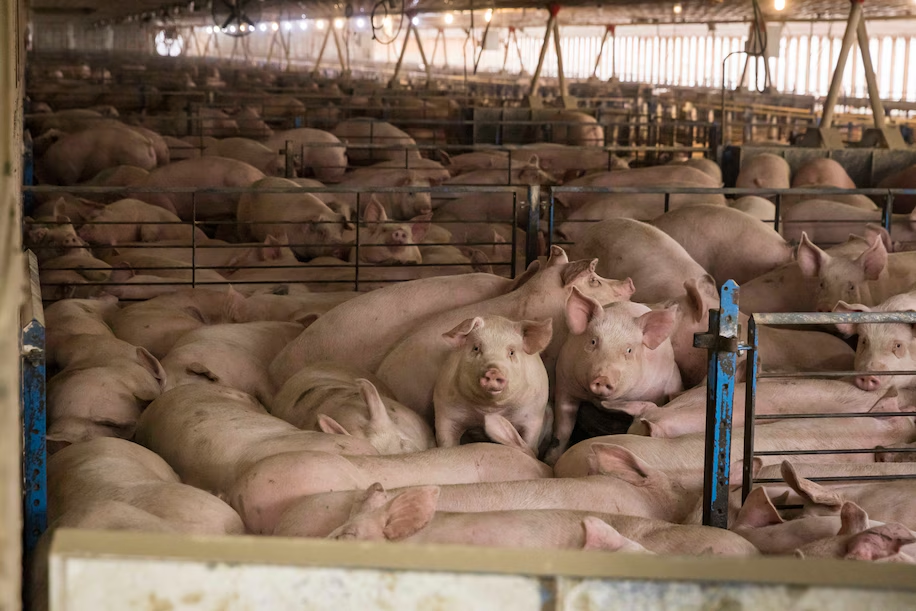
The most outspoken of these candidates, Health and Human Services pick Robert F. Kennedy Jr., spent years going after industrial factory farming, correctly opining in one New York Times op-ed that such farms “emit an enormous amount of pollutants that taint air, land and water.” In fact, in the 1990s, RFK brought the fight directly to companies such as China-owned Smithfield, which is the largest pork producer in the United States and subjects the millions of animals under its dominion to the kind of clinical and torturous lives for which future generations will undoubtedly condemn us. He also has opposed some animal testing, which has benefited society in some cases but which roils the conscience when undertaken for anything less than protecting human health.
Pam Bondi, Trump’s selection for attorney general, is a longtime animal advocate, having backed a ballot measure to ban greyhound racing in Florida, which she called a “black eye on our state.” She’s taken on puppy mills, arrested bear baiters, supported rescue efforts and worked to raise awareness for animal adoption.
Doug Burgum, if confirmed as secretary of the interior, would oversee our public lands and, necessarily, wildlife. As governor of North Dakota, Burgum opposed National Park Service efforts to forcibly remove and auction off a herd of wild horses from Theodore Roosevelt National Park. National Wildlife Foundation president and CEO Collin O’Mara, meanwhile, called Burgum “a strong advocate for science-driven wildlife management, conservation of wildlife habitat, [and] promotion of the outdoor recreation economy.”